
Bring Your Go-to-Market Teams Together with AI-Powered CRM
iris gives every team the same record. It’s the AI CRM for GTM teams that sales, marketing, and RevOps all work from.
Marketing knows who came to the webinar. Sales knows who replied. RevOps knows which tool holds which half. iris puts the lead, the campaign, the conversation, and the deal on one record, so each team starts where the last one stopped.


Simplify Your Go-to-Market Strategy with AI
A go-to-market strategy falls apart in the gaps between tools. iris keeps leads, campaigns, conversations, and deals in one AI CRM, so the plan your team agreed on is the plan everyone can see.
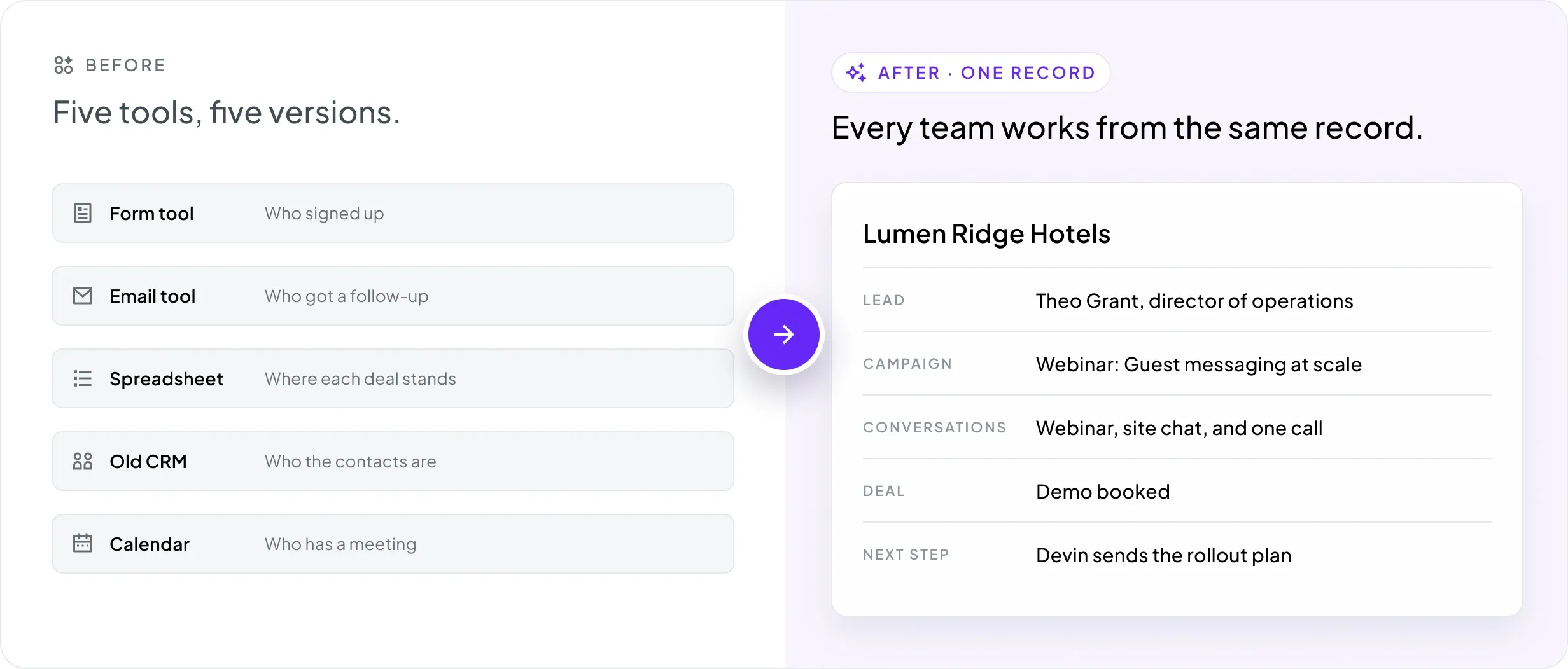
One record for every team.
Leads, campaigns, conversations, and deals live in one place, so go-to-market execution starts from the same facts.


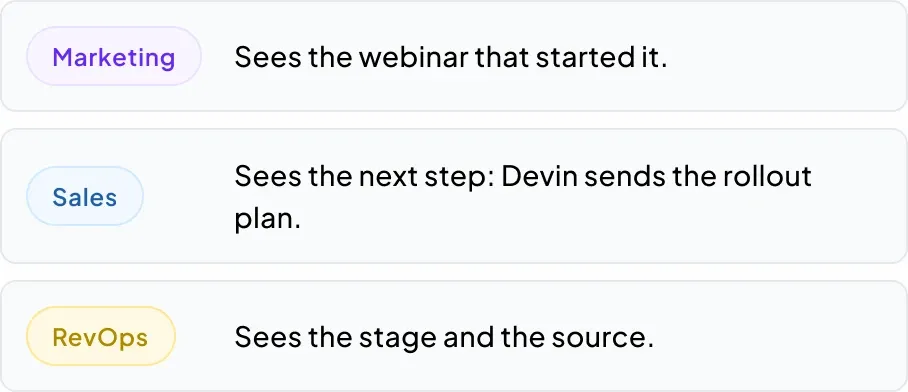
AI where the work happens.
iris logs each conversation and suggests the next step inside the record, not in a separate tab.


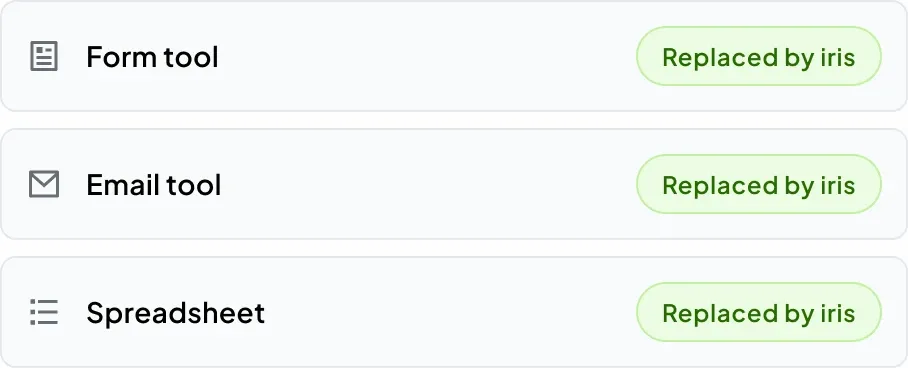
Fewer tools to keep in sync.
Your go-to-market technology shouldn’t be five tools. One system replaces your form, email, and spreadsheet tools.


Connect Sales and Marketing Workflows
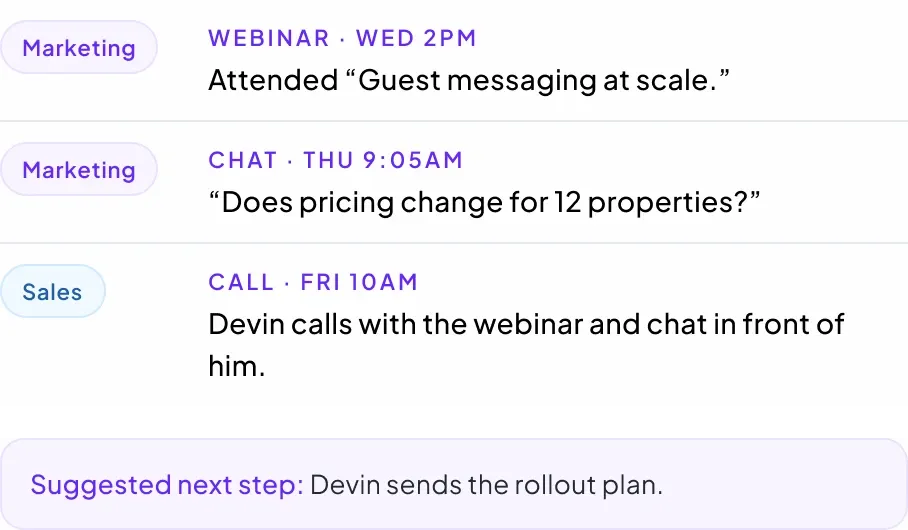
Wednesday, 2pm. Theo Grant from Lumen Ridge Hotels joins your webinar. Thursday morning he asks your site chat whether pricing changes for 12 properties. Marketing and sales work from the same record, so nobody asks Theo to start over. That’s sales and marketing alignment you can see.
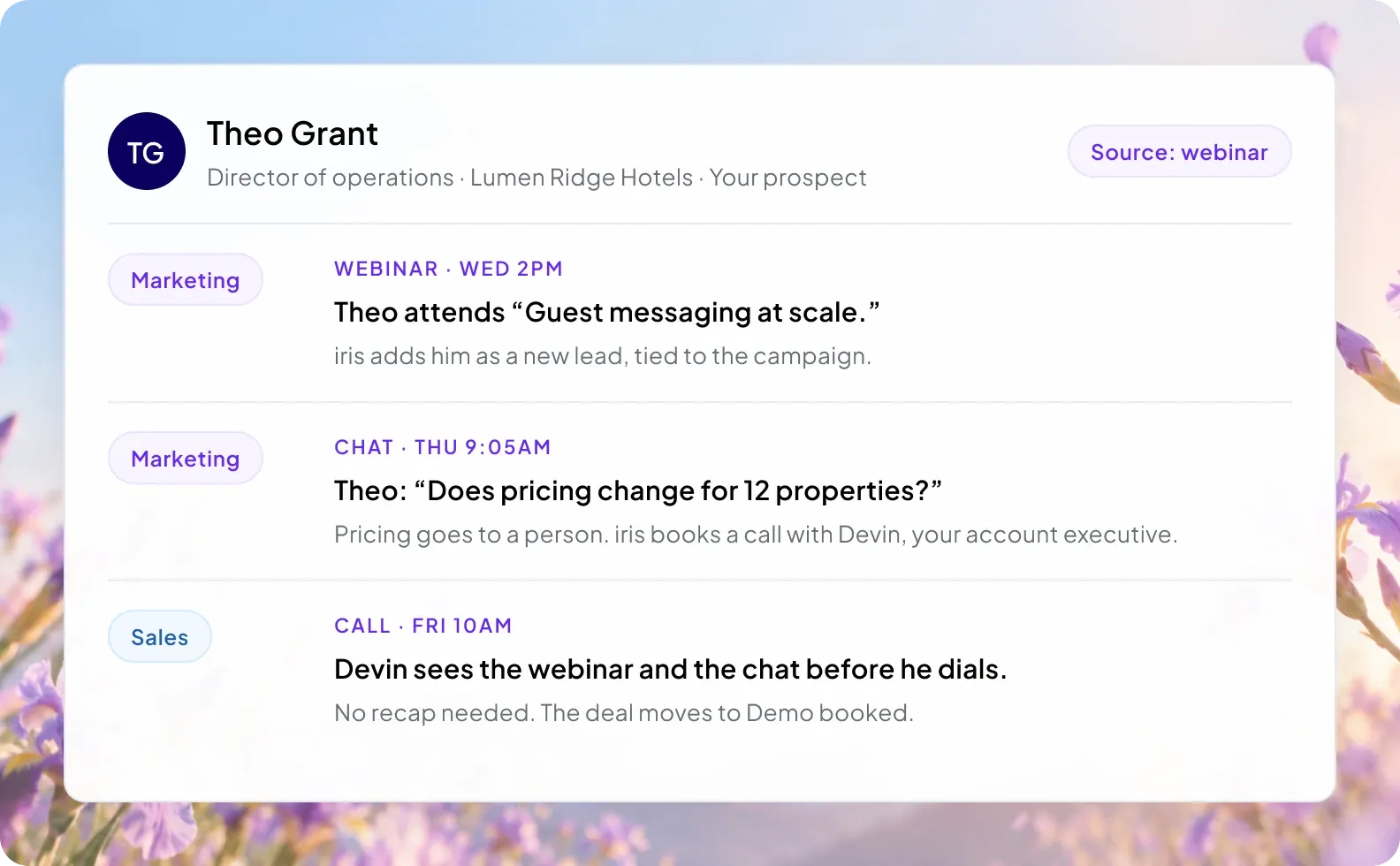
The campaign stays on the lead.
Every lead keeps the campaign or channel that brought it in.
A handoff with the history attached.
When a lead moves to sales, the conversations move with it. Sales starts where marketing stopped.
One view of each account.
Sales and marketing integration means both teams see the same people, conversations, and next step on every account.
Automate GTM Operations and Follow-Ups
iris runs the go-to-market operations between teams: follow-up, record-keeping, and lead routing. You set the rules for who gets each lead, and when.
Follow up on every signup
Webinar and form signups get a reply the same day, by text, chat, or email.
Route leads to the right person
Send each lead to the right rep by territory, company size, or source.
Keep records clean
iris adds to the record that already exists instead of making a new one, so reports start from clean data.
Room to build, for GTM engineers
Connect iris to the tools your team already runs through supported integrations.

Manage Your Sales Pipeline and Opportunities
Sales pipeline management works when every team trusts the same numbers. iris shows each deal’s stage, source, and next step, so marketing sees what its campaigns created and sales sees what to do next.
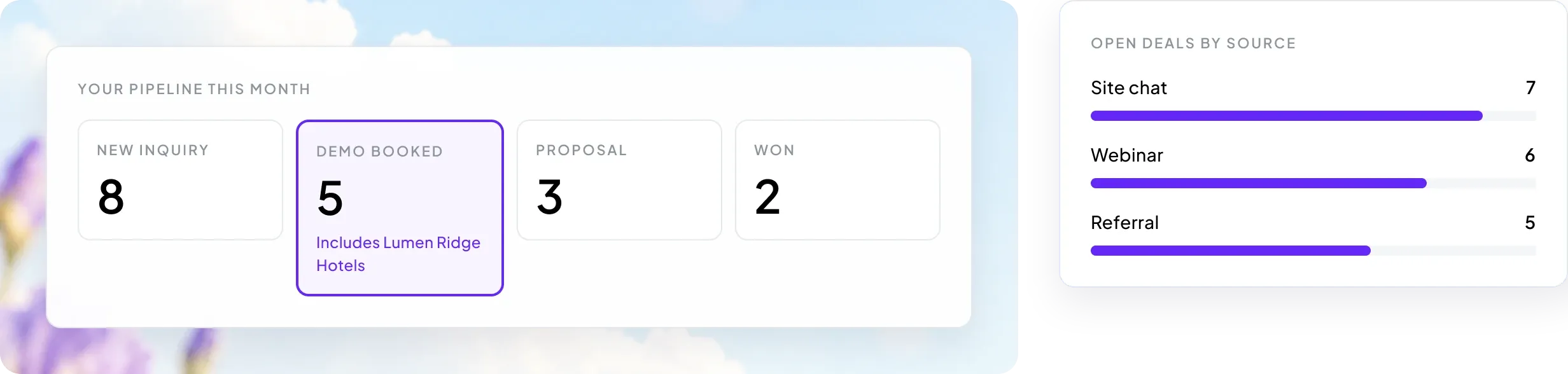
Every deal with its source.
See which campaign or channel started each deal.
Stages your team agrees on.
Name the stages once. Sales pipeline automation moves each deal, and every team reads the pipeline the same way.
A next step on every opportunity.
Each deal shows what happens next and who owns it.
GTM questions, answered.
Start with the work that happens between teams: following up on signups, routing leads, and keeping records current. That’s GTM automation. iris handles those steps inside one AI CRM, using rules your team sets. GTM engineers can extend it through supported integrations.
A shared CRM matters most, because it gives both teams the same record for each lead and account. Add a way to route leads and a pipeline view both teams trust. iris is GTM software that puts all three in one system, so there are fewer GTM tools to keep in sync.
Agree on what a good lead looks like, then make the handoff visible. When marketing and sales work from the same record, sales sees the campaign history and marketing sees what happened next. iris keeps that history on every record as it happens.


One system, so there’s less mess to own.
- 14-day free trial
- Month-to-month
- Cancel anytime